Your Apartment Has a Clock. You Just Haven't Learned to Read It Yet.
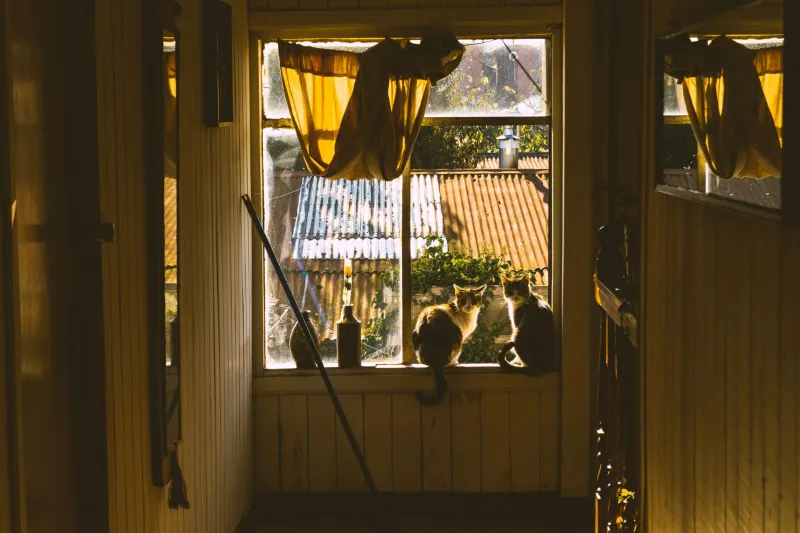
Somewhere around 2 p.m., the light in your living room does something. Maybe it goes golden and horizontal, slicing across the floor at an angle that makes even your beat-up IKEA bookshelf look like a Renaissance painting. Maybe it disappears entirely, swallowed by the building next door, and the room goes cool and dim in a way that feels almost deliberate. You've probably noticed it — registered it somewhere in the back of your brain — and then ignored it completely because you had a Slack message to answer.
That was a mistake.
Your apartment is not a passive container. It's a system with its own tempo, its own logic, its own version of a daily planner. And if you've been fighting it — scheduling video calls during the glare, trying to paint or write or think during the flat, lifeless hours when your space goes acoustically weird — you already know, on some level, that something's off. You just haven't had a name for it yet.
Consider this your introduction to apartment intelligence: the idea that your space has a temporal personality, and learning to read it might change everything.
The Light Is the First Language
Light is the most legible part of your apartment's internal schedule, and it shifts more dramatically than most of us realize. Depending on which direction your windows face, your apartment is running a completely different program than your neighbor's.
East-facing rooms are morning animals — bright, energized, and practically caffeinated by 8 a.m., then progressively cooler and more withdrawn as the day moves on. West-facing spaces are slow starters that hit their peak drama right around the time you're usually thinking about dinner. North-facing apartments get that famous flat, even light that painters have chased for centuries — consistent, contemplative, easy on the eyes. South-facing rooms are the overachievers: bright most of the day, sometimes aggressively so, demanding that you either lean into the energy or invest in some serious window coverings.
None of these is better or worse. They're just different schedules. The question is whether you're working with yours or against it.
If your apartment's best creative light hits at 10 a.m. and you're spending that window in back-to-back meetings, something is out of alignment. That's not a personality flaw. It's a scheduling problem — and it's fixable.
Sound Has a Schedule Too
Light gets all the credit, but sound is running its own parallel program. Urban apartments especially have a sonic rhythm that most residents tune out — until they don't.
There's the morning surge: garbage trucks, school drop-offs, the guy upstairs who apparently does CrossFit at 6:45 a.m. every single day without fail. Then a mid-morning lull, a lunch rush of noise, an afternoon quiet that settles in around 2 or 3 p.m. in most residential buildings, and then the evening swell as people come home, start cooking, turn on televisions.
If you've ever noticed that you write better at a certain time of day, or that your focus evaporates after 5 p.m., part of what you're responding to is the acoustic texture of your space at those moments. Your apartment's sound environment is shaping your cognition in real time, and you probably haven't consciously mapped it once.
Try this: for one week, keep a loose log — not obsessive, just a few words — of when your apartment feels sonically open versus when it feels cluttered with noise. You'll start to see patterns. And those patterns are information.
Seasonal Intelligence: The Long Game
Beyond the daily rhythms, your apartment is also running a slower, seasonal cycle that most people only notice when it becomes a problem. The winter light that makes your home office feel like a submarine. The summer heat that builds in the west-facing bedroom until it's basically uninhabitable by July. The way spring sounds different — genuinely, acoustically different — once the windows can finally stay open.
These seasonal shifts aren't inconveniences to be managed. They're the long chapters in your apartment's ongoing story, and they come with their own creative invitations.
A lot of writers and artists talk about their most productive periods in terms of seasons without fully realizing they're talking about their apartments. The winter hibernation that produced a whole body of work. The summer restlessness that sent them out of the apartment entirely and into the city. The fall reset that made them want to rearrange everything.
Your apartment is running a seasonal intelligence that your nervous system is already responding to. Getting conscious about it just means you get to be intentional about it too.
How to Actually Sync Up
Okay, so your apartment has rhythms. What do you do with that information?
Start with observation, not intervention. Before you rearrange anything or buy a blackout curtain or download a new productivity app, just watch. Spend a week moving through your apartment with a little more attention than usual. Notice where you naturally gravitate at different times of day. Notice which rooms feel alive at 9 a.m. versus 9 p.m. Notice where you end up when you're stuck, and where you end up when things are flowing.
Audit your schedule against your space. Look at your calendar and map it onto what you now know about your apartment's rhythms. Are you doing your most demanding cognitive work during your space's noisiest, most chaotic hours? Are you trying to wind down in a room that's flooded with late afternoon sun? Small adjustments here — moving a standing meeting, shifting your creative work block by an hour, changing which room you work in at which time of day — can have genuinely outsized effects.
Let the space lead sometimes. This is the weirder, more interesting suggestion. Instead of always imposing your schedule on your apartment, try occasionally following the apartment's lead. When the light goes golden and strange at 4 p.m., stop what you're doing and let yourself just be in it for ten minutes. When the apartment goes quiet in that particular way it does on Sunday mornings, resist the urge to immediately fill the silence. These moments of attunement — of actually syncing up with your space rather than pushing through it — tend to produce unexpected things. Ideas. Rest. A different relationship with where you live.
The Intelligence Was Always There
There's something quietly radical about the idea that your apartment has been trying to communicate with you this whole time — that the light and the sound and the seasonal shifts weren't just background noise but a kind of ongoing conversation you hadn't bothered to join.
The spaces we live in are smarter than we give them credit for. Not smart in a tech-enabled, sensor-loaded way, but smart in the old sense: responsive, patterned, full of information if you're paying attention.
Your apartment already has a schedule. It's been keeping it faithfully, whether you showed up for it or not.
Maybe it's time to finally compare calendars.