When Your Apartment Vetoes Everything: Learning to Negotiate With a Space That Has Its Own Vision
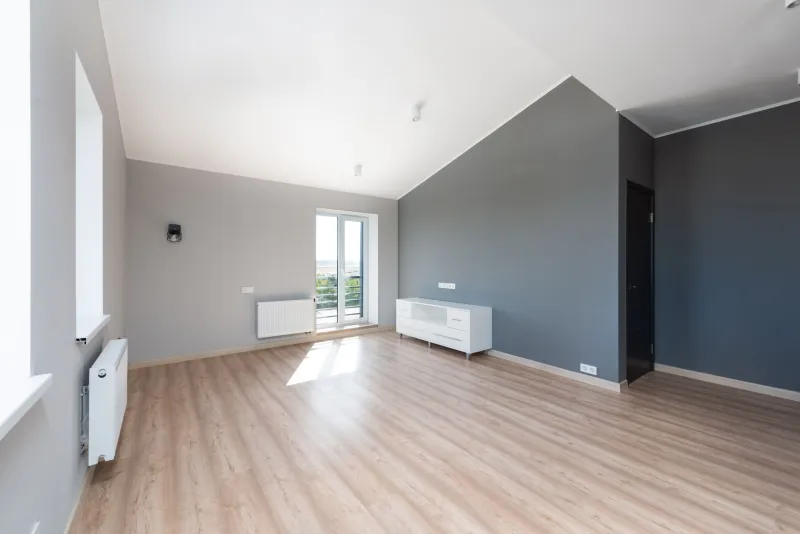
You had a plan. You always have a plan. There was a specific shade of terracotta you'd been thinking about since last October. A rattan headboard. That particular style of pendant light everyone seems to have and yet somehow still feels personal when you imagine it hanging in your space. You moved in, you started executing, and then — nothing. Everything looked wrong. Not wrong in a fixable way. Wrong in a way that felt almost deliberate, like the apartment itself was slowly, politely, and then not-so-politely refusing to become what you needed it to be.
This is not a rare experience. It happens more than designers like to admit, more than renters know how to articulate, and almost always more than once in a lifetime of moving through spaces. Some apartments push back. Some push back hard.
The question worth sitting with isn't what am I doing wrong — it's what is this space trying to tell me?
The Rejection Isn't Personal (Except When It Is)
Designer and spatial consultant Mara Delacroix, who works primarily with renters in Chicago and New York, has a name for this phenomenon. She calls it "aesthetic incompatibility," and she's careful to distinguish it from bad taste or poor planning.
"I've worked with people who have genuinely sophisticated design instincts," she says. "And I've watched them bring those instincts into a space and just — fail. Repeatedly. The room absorbs everything and gives nothing back. And the instinct is always to try harder, spend more, add more. When usually the opposite is true."
The architecture is doing something. Old buildings have proportions that were built around different assumptions — higher ceilings, narrower windows, rooms designed for uses we've long since abandoned (the formal parlor, the servant's entrance, the deliberate separation of public and private domestic life). When we bring contemporary furniture and contemporary visual logic into those bones, the mismatch isn't just aesthetic. It's almost philosophical.
But it's not only old buildings. A poorly laid-out 2010 construction in a mid-rise can have the same quality of refusal — a living room that makes every sofa arrangement feel provisional, a kitchen that defeats every attempt at warmth. The architecture has an argument to make, and it will keep making it until you listen.
What Residents Actually Experience
Jasmine T., a graphic designer in Atlanta, spent eighteen months trying to make her apartment look like the maximalist, color-saturated space she'd always wanted. "I love color. Like, it's my whole professional life. I'm good at color. And this apartment just ate everything I put in it. The walls — I painted them twice — they just looked flat. I'd add a bold piece of furniture and it would disappear. I couldn't figure out what was happening."
What was happening, she eventually realized, was that her apartment had almost no natural light and extremely low ceilings. The space was built for a kind of quiet, contained intimacy that her visual instincts were actively fighting against. The apartment wasn't broken. It wasn't even wrong. It was just something she hadn't accounted for — a space with a genuinely different personality than her own.
"I finally stopped," she says. "I got rid of almost everything, went really minimal, chose two or three things I loved and let them breathe. And the apartment completely transformed. It was like it had been waiting for me to get out of my own way."
This is the surrender moment that designers and residents describe again and again. Not giving up — surrendering. There's a difference, and it matters.
The Psychology of Letting a Space Win
There's a reason this feels like a defeat when it happens. We come to our apartments with identity attached to our design choices. The way we want our homes to look is a projection of who we are — or who we want to be seen as. When the space refuses that projection, it can feel like a kind of rejection of the self.
But spatial psychologists have a more generous interpretation. "The resistance a space offers can actually be a valuable mirror," says Dr. Theo Abrams, who studies the relationship between environment and identity at a research institute in Philadelphia. "When nothing works, it often means you're trying to impose a version of yourself that isn't quite current. The space isn't rejecting you. It's rejecting the version of you from three years ago who made that mood board."
This reframe is genuinely useful. The apartment that won't cooperate might be doing you a favor — forcing a confrontation with whether the aesthetic you've been chasing actually reflects who you are now, in this specific life, in this specific city, in this specific chapter.
Listening Instead of Decorating
So what does it look like in practice to stop fighting and start listening?
Delacroix has a method she calls "the blank week." She asks clients who are stuck to remove everything non-essential from the space for seven days. No art on the walls, minimal furniture, only what's functionally necessary. "You're not living in a void," she explains. "You're listening. You're letting the apartment talk without you interrupting it."
What people notice during that week tends to be specific and surprising: where the light actually lands at different times of day, which corners feel naturally inhabited and which feel exposed, whether the space is fundamentally social or fundamentally private in its energy. These are the clues. These are what the apartment has been trying to communicate underneath all the noise of your intentions.
From there, the design process becomes less about imposing and more about responding. You're no longer decorating — you're having a conversation. And conversations require actually hearing what the other party is saying.
The Apartment Knows Something
There's a slightly woo-adjacent idea that floats around interior design circles: that spaces have memory, that they retain something of every person who's lived in them, that they carry a kind of accumulated character that new residents are either working with or against. You don't have to believe in anything mystical to find this useful as a framework.
Because functionally, spaces do have histories. The wear patterns on the floor tell you where people walked. The placement of outlets and fixtures tells you what the builder imagined about how the space would be used. The proportions of the rooms tell you something about the era and the economics of the building's construction. All of that is information. All of that is the apartment trying to communicate.
When your space rejects your vision, it's not an obstacle. It's an invitation — to look more closely, to let go of the plan, to discover what this particular apartment, with its particular bones and light and history, actually wants to become.
And sometimes what it wants to become is something you never would have imagined for yourself. Something better. Something that fits not the person who packed the moving boxes, but the person who unpacked them — and kept changing in the months and years that followed.
The apartment that refuses you might be the most honest collaborator you've ever had.