Never Done, Never Better: The Radical Freedom of the Apartment That Won't Quit Becoming
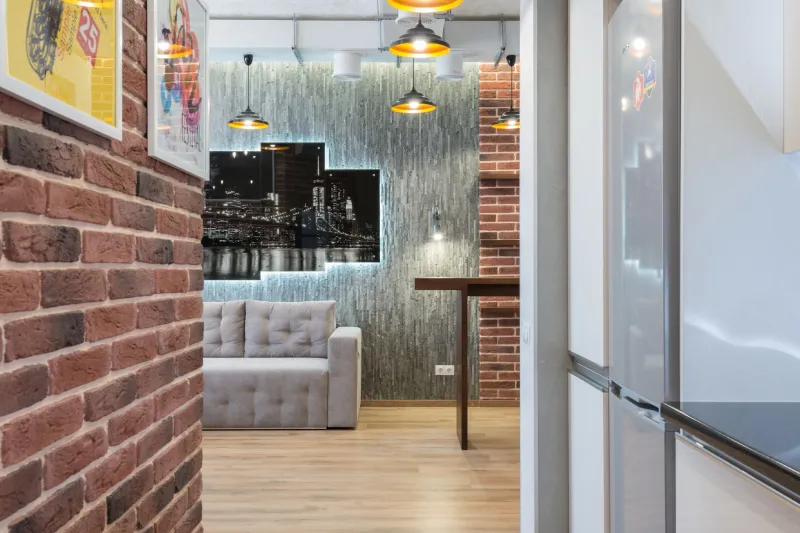
There's a particular kind of shame that comes with the unfinished apartment. You know the feeling. A guest is coming over and you find yourself rehearsing apologies in advance — sorry about the exposed pipe, sorry about the unpainted wall, sorry about the shelf that's been 'going up' since March. We've all been trained to treat incompletion as embarrassment, as evidence of some personal failure to get it together.
But what if we've had it completely backwards?
A quiet but stubborn counter-movement is taking root in apartments across the country, in Brooklyn railroad flats and Chicago two-flats and cramped Los Angeles studios where the landlord's "renovations" stopped halfway through and never resumed. People are choosing — actually choosing — to leave things unfinished. And the results, creatively and psychologically, are turning out to be pretty extraordinary.
The Tyranny of Move-In Ready
The real estate industry has a phrase it loves: move-in ready. It conjures a particular image — fresh paint, clean grout, cabinet hardware that matches, a blank neutrality designed to offend no one and inspire nothing. It is, in the most literal sense, a space that has already decided what it wants to be before you ever arrive.
Marcela Reyes, a textile artist based in Philadelphia, spent years chasing that ideal. She repainted her apartment three times in four years trying to land on the "right" color. She bought furniture that coordinated. She waited until everything felt finished before she let herself truly inhabit the space.
"I kept treating the apartment like a project I had to complete before my real life could start," she says. "And then I realized — that's not a design philosophy. That's anxiety with a mood board."
When a plumbing repair left one wall of her living room stripped to bare concrete, she made a decision that surprised even her: she left it. Just left it. And something shifted.
"That wall became the most alive surface in the apartment," she says. "It had texture, history, honesty. Everything else suddenly looked like it was trying too hard."
Incompletion as Creative Infrastructure
There's actual psychological science lurking beneath this instinct. The Zeigarnik Effect — a well-documented phenomenon in cognitive psychology — holds that the human brain fixates more intensely on unfinished tasks than completed ones. We remember interrupted stories. We linger in open loops. Incompletion generates a kind of cognitive energy that completion, paradoxically, extinguishes.
Applied to living spaces, this means an unfinished apartment isn't a passive backdrop. It's an active participant in your mental life. It keeps asking questions. It refuses to let you settle into autopilot.
Daniel Cho, a musician and sound designer in Seattle, has been "renovating" his apartment for six years. The scare quotes are his. Half the kitchen shelving is installed. One bedroom wall is painted a deep terracotta; the others remain raw white. A doorframe he started stripping is suspended somewhere between its old brown paint and whatever comes next.
"My apartment looks like a thought that isn't finished yet," he says, laughing. "And honestly? So does most of my best work. I think they're related."
He's not wrong to sense the connection. Many artists describe their most generative working environments as ones that feel provisional, in-process, alive to possibility. The finished, perfected space sends a subtle signal: we're done here. The unfinished space says something else entirely: anything could still happen.
The Shelf That Changed the Floor Plan
There's also a deeply practical argument for the perpetually unfinished apartment, one that has nothing to do with aesthetics and everything to do with flexibility.
When you commit fully to a finished space — when every shelf is installed, every surface painted, every piece of furniture locked into its designated zone — you've made a bet about how you're going to live. And life, as most of us have discovered, is not great at honoring those bets.
Jamila Okonkwo, a freelance graphic designer in Atlanta, moved into her current apartment intending to set up a proper home office in the second bedroom. She bought a desk. She started mapping out shelving. Then she got a dog, her sister visited for three months, and the office became a guest room became a studio became something she can't quite name but uses every single day.
"If I'd finished that room the way I planned, I'd have had to undo everything," she says. "Because I left it half-done, it just... evolved. The space grew with me instead of against me."
The half-installed shelf she'd originally intended for design books now holds her dog's gear on the bottom, her current project files in the middle, and a rotating collection of objects she finds interesting on top. It is, she insists, the most useful piece of furniture she owns.
What Exposed Walls Actually Expose
There's a vulnerability to the unfinished apartment that deserves naming directly. Bare drywall and unpainted trim don't just look different — they feel different. They make a space feel less defended, less performed, less curated for an audience that may not even exist.
In a culture that has essentially turned home interiors into content — where every corner is a potential Instagram backdrop, every bookshelf a personal brand statement — there's something genuinely radical about a space that refuses to present itself. An unfinished apartment cannot be staged. It can only be lived in.
Marcela Reyes puts it this way: "My apartment stopped being something I showed people and started being something I used. That sounds small, but it changed everything about how I felt when I walked through the door."
How to Live Unfinished Without Living in Chaos
None of this is an argument for neglect. Deferred maintenance, leaking pipes, and genuinely hazardous conditions are not creative choices — they're just problems. The distinction matters.
The unfinished apartment as a design philosophy is about intentional incompletion: choosing which things to leave open, which surfaces to let breathe, which projects to hold lightly rather than rush toward closure. It's the difference between a wall you're ignoring and a wall you're watching, curious about what it wants to become.
A few principles that practitioners of this approach tend to share:
Let function lead. Figure out how you actually use a space before you commit to how it looks. The shelf you install after six months of living in a room will be in exactly the right place. The one you install on move-in day is a guess.
Make friends with texture. Exposed brick, raw concrete, unstained wood — these surfaces aren't unfinished so much as honest. They carry history and character that paint and polish tend to erase.
Treat incompletion as an ongoing conversation. The unfinished apartment isn't a problem to defer — it's a dialogue to sustain. Check in with your space. Notice what's working and what isn't. Let the answers arrive in their own time.
Resist the apologetic instinct. The impulse to explain your unfinished space to guests is worth examining. What are you actually apologizing for? Usually, it's for not performing the version of adulthood that involves a finished, coordinated home. That's a performance worth skipping.
The Apartment That Keeps Becoming
Apartment Number 9 has always believed that odd spaces inspire extraordinary lives. But maybe the oddest space of all is the one that refuses to declare itself finished — the apartment that stays restless, stays curious, stays in process right alongside the person living in it.
There's a particular kind of home that feels truly inhabited. Not decorated. Not staged. Not completed. Inhabited. You can feel it when you walk in — the sense that someone is actually living here, that the space is still being figured out, that it hasn't given up on evolving.
That feeling? It turns out, you can choose it. You just have to be willing to leave a few walls bare.