Stop Decorating. Start Listening: What Happens When Your Apartment Wants to Stay Empty
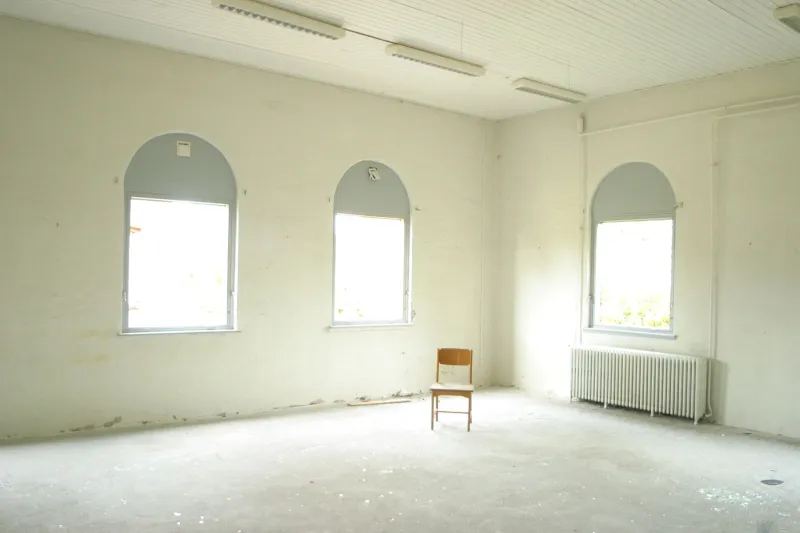
There's a specific kind of frustration that hits when you've rearranged the same bookshelf three times, tried four different rug configurations, and still feel like your apartment looks wrong. Not bad, exactly. Just wrong. Like the space itself is crossing its arms and refusing to cooperate.
Most of us respond by buying more stuff. A new lamp. A different throw. Maybe a statement chair that ends up facing the wall because there's nowhere else logical for it to go. We treat the apartment like a problem with a retail solution.
But a growing number of creatively wired people are arriving at a different conclusion: maybe the apartment isn't broken. Maybe it's asking for something you've been trained to see as failure — emptiness.
The Room That Wouldn't Be Tamed
Interior designers have a term for spaces that resist decoration: they call them "strong rooms." These are apartments — or individual rooms within them — that have such a distinct architectural presence, whether from unusual proportions, strange light, or raw material honesty, that adding objects diminishes rather than enhances them.
But you don't need a designer to tell you when you're living in one. You already know. It's the apartment where the one piece of art you hung felt like it was apologizing for being there. It's the room where furniture arrangements never quite settle, where everything you bring in seems to start a quiet argument with the walls.
For most people, this is a decorating failure. For a surprising number of artists, writers, musicians, and makers, it turned out to be the best thing that ever happened to their creative output.
What Emptiness Actually Does to Your Brain
Here's the thing about a room that doesn't have much in it: your nervous system has nowhere to land. There's no object to fixate on, no visual narrative pulling your attention sideways, no curated corner demanding that you admire it. And in that absence, something interesting happens — your mind starts generating its own content.
Environmental psychologists have documented this for decades, though it tends to get buried under the more marketable findings about biophilic design and color psychology. Sparse environments don't make people feel empty. They make people feel generative. The brain, denied external stimulation, turns inward. And that's precisely where creative work lives.
This isn't the same as sensory deprivation. A deliberately spare apartment still has texture — the grain of an unfinished floor, the particular quality of afternoon light through an uncovered window, the sound of the building doing its thing. It's more like clearing the desktop of your computer so you can actually see what files you're working with.
Intentional Minimalism vs. Trend Minimalism
It's worth making a distinction here, because the word "minimalism" has been thoroughly co-opted by the design industry to mean something it was never supposed to mean.
Trend minimalism is expensive. It involves specific furniture brands, a very particular shade of white, and objects that are technically few in number but maximally curated. It's minimalism as aesthetic performance — a way of signaling taste through restraint that still costs a lot of money and requires a lot of decisions.
Intentional minimalism, the kind we're talking about, is different. It's less a style choice and more a response to what a space seems to need. It doesn't require a specific furniture brand or a perfectly edited object collection. Sometimes it just means not putting anything on that wall. Not because you're following a rule, but because every time you try to hang something there, it feels like a mistake.
People who land here often describe it as "giving up" before they realize they've actually arrived somewhere. The apartment stopped being a project. And then, weirdly, everything else got easier.
The Unfinished Room as a Creative Partner
There's a concept in jazz called negative space — the notes you don't play, the silence between phrases, the beat that's implied rather than struck. Miles Davis built a career on it. And the same principle applies, surprisingly literally, to the rooms where a lot of creative work actually gets done.
When your apartment doesn't have a lot going on visually, it becomes a collaborator rather than a backdrop. Writers talk about needing a room that doesn't distract them; what they're often describing is a room that has cleared the floor so their thoughts can move around freely. Painters talk about needing walls that don't compete with what they're looking at. Musicians talk about needing a sonic environment that isn't already telling a story.
The sparse apartment isn't neutral. It's active. It's doing something for you precisely by doing less.
How to Know If Your Apartment Is Asking for This
Not every apartment is a strong room, and not everyone thrives in spare environments. But there are some signals worth paying attention to.
If you've decorated and redecorated and still feel like the space doesn't quite fit you, that's worth sitting with rather than shopping your way through. If you find yourself most focused and most energized in the least-furnished corner of your apartment — the kitchen table with nothing on it, the spot by the window with just a chair — that's data.
If the thought of removing things feels more exciting than the thought of adding them, listen to that.
And if you've ever stood in a room that had almost nothing in it and felt, unexpectedly, completely at home — your apartment might have been trying to tell you something all along.
The Permission Slip You Didn't Know You Needed
American design culture is relentlessly additive. More texture, more layers, more personality expressed through objects. There's enormous pressure — from social media, from shelter magazines, from the sheer volume of stuff available to us — to fill every surface with intention.
Choosing not to is its own radical act.
Leaving a wall bare isn't laziness. Keeping a room spare isn't an unfinished project. Sometimes it's the most considered design decision you can make — the one that requires the most confidence and the least receipt-keeping.
Your apartment might be refusing to be decorated because it already knows what it is. The question is whether you're willing to stop arguing with it long enough to find out.
Some of the most interesting creative lives are being lived in rooms that look, from the outside, like they haven't been touched. What's actually happening inside them is something else entirely.