The In-Between Zones: How Your Hallway Is Running Your Creative Life Without Your Permission
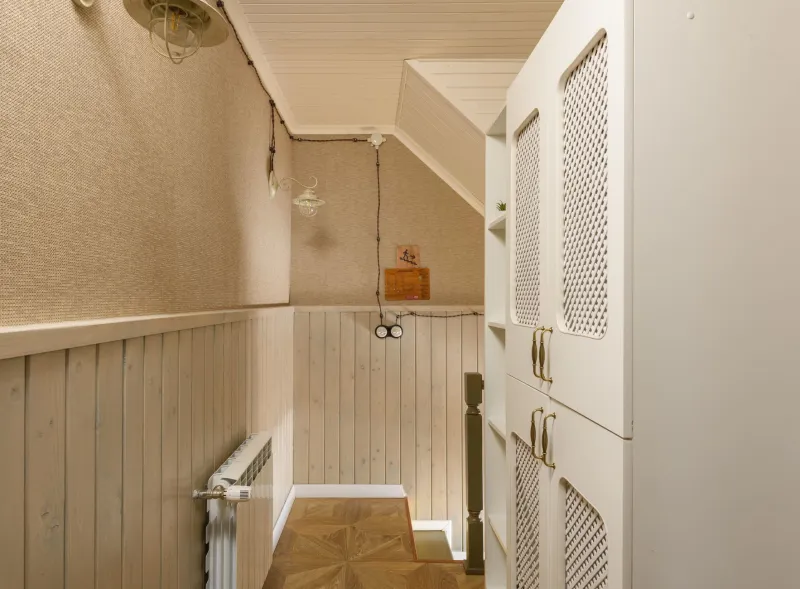
There's a moment most apartment dwellers know intimately: you're moving from the bedroom to the kitchen, half-awake, coffee on your mind, and you pass through that narrow corridor without a single conscious thought. It's a non-event. A spatial footnote. And yet, according to a growing body of research in environmental psychology and architecture, that forgettable stretch of floor might be doing more to shape your daily creative output than your carefully curated mood board wall ever will.
Welcome to what some designers are calling the hallway effect — the subtle but powerful way that transitional spaces influence our mental state, emotional tone, and yes, our capacity for original thought.
The Psychology of Moving Through Space
Here's something wild to sit with: your brain doesn't experience a room the way a camera does. It doesn't take a snapshot and move on. Instead, it builds a continuous narrative of your environment based on movement, transition, and sequence. Dr. Eve Edelstein, a neuroscientist who has spent years studying the intersection of architecture and brain function, has described hallways and corridors as "neural reset buttons" — brief moments of environmental neutrality that give the brain a chance to shift gears between contexts.
In apartment living, where the kitchen, the home office, the bedroom, and the living room might be separated by just a few feet of painted drywall, those transitional inches matter enormously. "When you compress multiple life functions into a small footprint, the passages between them carry an outsized psychological load," says Brooklyn-based architect Maren Solís, who specializes in adaptive small-space design. "If a hallway feels oppressive — dark, cluttered, blank — it functions like a psychological speed bump every time you pass through it."
And you're passing through it constantly. Research on home movement patterns suggests that apartment residents traverse their primary corridors an average of 15 to 20 times per day. That's 15 to 20 micro-experiences of either friction or flow, depending on what those spaces offer.
Dead Zones Are a Design Myth
The conventional wisdom in apartment design has long treated hallways as connective tissue — functional but not really alive. You hang a mirror to make it feel bigger, maybe toss down a runner rug, and call it done. But that logic fundamentally misunderstands what transitional spaces can do when they're treated as intentional environments rather than logistical necessities.
Solís points to the Japanese concept of ma — the meaningful pause between things — as a framework for rethinking apartment corridors. "In traditional Japanese architecture, the space between rooms is considered just as significant as the rooms themselves. It's where psychological transition happens. Western apartment design tends to treat that space as wasted square footage, but it's actually prime real estate for mental recalibration."
For creative workers especially — writers, designers, musicians, anyone whose output depends on mental flexibility and the ability to shift between different modes of thinking — the quality of these transitional moments can make or break a productive day. A hallway that offers a moment of visual interest, tactile texture, or even a single surprising object can serve as a gentle cognitive interrupt, nudging the brain out of autopilot and into a more receptive, associative state.
What Architects Are Actually Doing About It
Forward-thinking designers working in the small-apartment space (which, let's be honest, is most of the US rental market right now) are starting to treat hallways and entryways as first-class design opportunities. Some of the most interesting interventions are remarkably low-tech.
Light is the most powerful tool. Narrow corridors tend to get whatever ambient light spills in from adjacent rooms, which usually means they're dim, flat, and kind of sad. Adding a single directional sconce or even a plug-in wall light with warm-toned bulbs can completely transform the emotional quality of a passage. "Light at eye level in a hallway creates intimacy rather than compression," Solís explains. "It makes you feel like you're moving through something intentional rather than just shuffling between spaces."
Texture is the underrated second act. A stretch of exposed brick, a section of grasscloth wallpaper, a gallery wall of tactile art — anything that invites the fingertips or the eye to slow down, even fractionally, interrupts the autopilot walk-through and creates a micro-moment of sensory engagement. And sensory engagement, even brief, is associated with increased creative alertness.
Then there's what Solís calls "the curiosity object" — a single unexpected element placed in a transitional space that has no practical function other than to make you think. A vintage map. A sculptural lamp. A shelf holding exactly three things that don't obviously belong together. "It doesn't need to be expensive or elaborate," she says. "It just needs to be there, and it needs to be genuinely interesting to you personally."
Your Entryway Is Your Daily Threshold Ritual
If hallways are the corridors of your internal life, entryways are the ceremonial gates. The moment you walk through your front door is one of the most psychologically loaded transitions of any given day — you're moving from the public world into your private one, or vice versa. And yet most apartment entryways in America are an afterthought: a coat hook, a pile of shoes, maybe a table that's become a dumping ground for mail and mystery objects.
Neuroscientists who study ritual behavior note that humans are deeply responsive to threshold experiences — moments that mark a clear shift from one context to another. Religious traditions, military culture, and athletic performance psychology all leverage this through deliberate entry rituals. Your apartment entryway can do the same thing, even if it's three feet wide and shares square footage with the electrical panel.
A few intentional choices can transform a cramped entryway into a genuine psychological transition zone: a scent diffuser with a fragrance you associate only with home, a small piece of art that you chose specifically to greet yourself with, a designated spot for your phone that signals a shift away from the outside world. These aren't decorating tricks. They're behavioral design — using your physical environment to cue a mental state.
The Practical Playbook
So what does all of this look like in a real apartment, with a real budget, and real constraints like a landlord who has opinions about paint?
Start with light. Even a $30 plug-in sconce can transform a dark corridor. Go warm (2700K or lower) and aim for eye-level placement rather than overhead.
Add one curiosity object. Not a gallery wall, not a full redesign — just one thing in your hallway that genuinely interests you and has no practical job to do.
Address the floor. A good rug in a transitional space does double duty: it defines the zone visually and creates a tactile shift underfoot that the brain registers as a micro-transition.
Create a sensory anchor at your entryway. Scent is particularly powerful because it bypasses the analytical brain and hits the limbic system directly. A consistent fragrance at your threshold is one of the fastest ways to train your nervous system to shift into home mode.
And maybe most importantly: stop treating these spaces as problems to be minimized. The in-between zones of your apartment are where your day gets stitched together. Make them worth passing through.