Sacred Ground You're Standing On: The Emotional Reckoning of Leaving an Apartment You've Loved
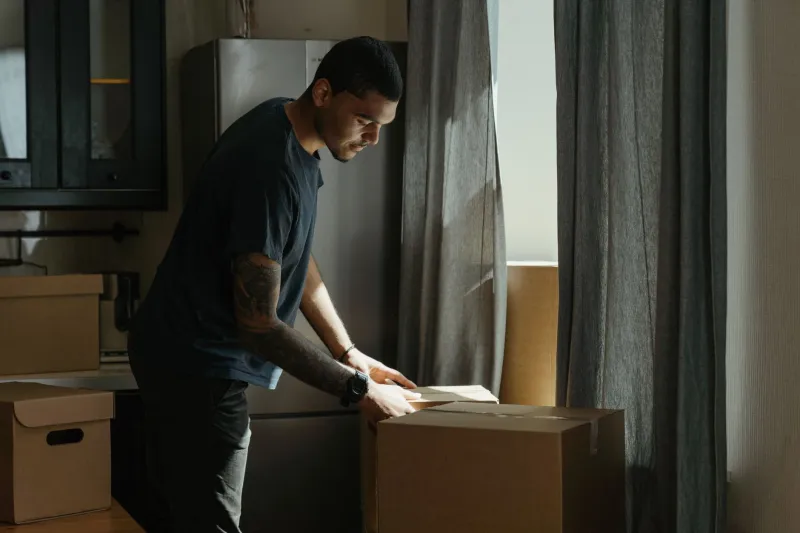
You know the feeling. You're standing in the kitchen at 11pm, waiting for the kettle to boil, and it hits you — this apartment doesn't quite fit anymore. Not because the ceiling is too low or the closet is a joke (though both are true), but because you have changed, and the walls somehow haven't caught up.
Leaving an apartment isn't like leaving a hotel room. It's more like leaving a version of yourself behind — and that's a much messier kind of departure.
The Apartment That Made You
There's a particular alchemy that happens when you inhabit an odd space long enough. The weird angle of light through your east-facing window becomes the reason you started painting again. The narrow galley kitchen — the one you cursed every Thanksgiving — taught you to cook efficiently, creatively, out of pure necessity. The radiator that clanks at 2am became, inexplicably, a comfort.
Researchers in environmental psychology have long argued that our spaces don't just reflect who we are — they actively participate in shaping us. Dr. Sally Augustin, author of Place Advantage, suggests that the physical characteristics of our homes influence everything from our cognitive patterns to our emotional regulation. In other words: your apartment has been doing a lot of quiet work on you this whole time.
Which makes leaving it feel, weirdly, like a breakup.
The Guilt Nobody Talks About
Here's the thing about outgrowing a space: it often happens before you're ready to admit it. Maybe you got a promotion and suddenly the home office that was once a creative cave feels like a liability. Maybe you ended a relationship and realized you decorated the whole place for someone else's taste. Maybe you just turned 34 and the party apartment energy has finally, mercifully, run its course.
And yet — you feel guilty for wanting more.
There's a cultural script in the US that ties home upgrades to success, but it doesn't account for the grief of the upgrade itself. We celebrate the new place on Instagram before we've properly mourned the old one. We pack boxes like we're running from something instead of acknowledging that we're walking toward something — and that the walking is its own emotional labor.
Apartment Number 9 readers know this tension intimately. You're the people who've hung artwork at weird heights to match the sloped ceiling. Who've learned to love the smell of your neighbor's cooking because it became part of your morning. Who've built a whole identity inside 650 square feet and now have to figure out which parts of that identity are portable.
What Stays When You Go
Here's a truth worth sitting with: the person the apartment made you doesn't have to stay behind when you leave.
Think about what the space actually gave you. That cramped reading nook cultivated a stillness practice you can take anywhere. The unreliable heat trained you to layer, to adapt, to find warmth in unexpected places — metaphorically speaking, that's not a bad skill set for life. The landlord who never fixed anything taught you how to fix things yourself, or at minimum, how to ask for help without shame.
The apartment was a school. Graduation isn't a betrayal.
The Nostalgia Trap
But here's where it gets complicated, because nostalgia is a liar with excellent taste in interior design.
When we romanticize the spaces we're leaving, we often compress time and flatten complexity. We remember the dinner party where everything clicked — not the six that didn't. We remember the golden afternoon light — not the January afternoons when the light disappeared entirely by 4pm and took our mood with it.
Nostalgia isn't wrong, exactly. It's just incomplete. And making a major life decision based on an incomplete story is how you end up staying somewhere two years past the moment you knew you needed to go.
A useful exercise: try to write down, honestly, what the apartment costs you right now. Not financially — emotionally, creatively, practically. What habits does it enable that you're not proud of? What does the space make harder? Sometimes the answers are clarifying in ways that feel almost uncomfortably direct.
The Permission You're Waiting For
If you've read this far, you probably already know what you need to do. You're just waiting for someone to tell you it's okay.
So here it is: it's okay to leave a place you love. It's okay to feel sad about it. It's okay to take a final walk through empty rooms and let yourself feel the full weight of everything that happened there — the heartbreaks and the breakthroughs, the bad decisions and the surprisingly good ones.
And then it's okay to close the door.
The odd spaces that shaped you are always going to be part of you — the way you arrange a room, the things you notice about light, the instinct to make something beautiful out of whatever you're given. You carry the apartment with you even after you've handed in the keys.
Moving On Is Not the Same as Moving Out
Moving out is logistics. Moving on is the harder, slower, more important work.
Moving on means integrating what the space taught you instead of running from what it represented. It means honoring the version of yourself who needed that exact apartment at that exact time — the one who couldn't have known they'd eventually need something different.
The most extraordinary lives aren't built in one apartment. They're built across many of them — each odd space contributing something irreplaceable to the person you're still in the process of becoming.
So go ahead. Start packing. But don't rush the goodbye. It deserves more than a few cardboard boxes and a Venmo to the movers.
Some spaces are sacred. And sacred things deserve a proper send-off.