Pipe Dreams and Street Noise: Learning to Listen to What Your Apartment Is Actually Playing
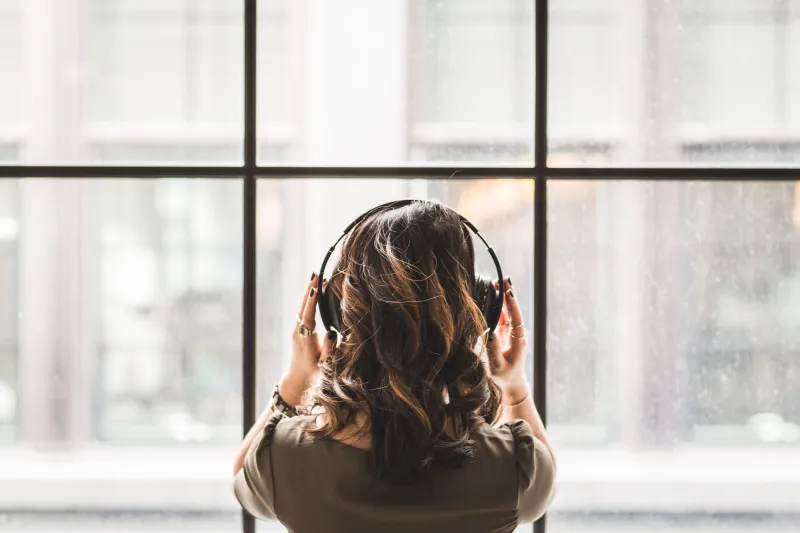
Close your eyes for a moment. Actually do it. Sit in whatever room you're in and just listen.
There's the obvious stuff—street traffic, maybe a TV somewhere, the ambient hum of a refrigerator doing its quiet, thankless work. But keep listening. There's something underneath all of that. A particular resonance in the walls. The way sound bounces off your specific ceiling height. The HVAC system cycling on and then off with a rhythm that, if you've been here long enough, you've stopped consciously hearing but somehow still register.
That's your apartment talking. It has been the entire time you've lived there. Most of us just never learned how to listen.
Every Space Has a Sonic Signature
Acousticians—people who study how sound behaves in physical spaces—will tell you that no two rooms sound exactly alike. The dimensions, the materials, the density of surrounding structures, the proximity to street level, the age of the building's infrastructure: all of it combines to create what sound designers call a "room tone." In film and television production, every location gets recorded in silence for thirty seconds before shooting begins. That recording—just the sound of the empty space—is called the room tone, and it's used in editing to make cuts feel seamless. The silence of a space is never actually silence. It's a frequency.
Your apartment has one. It was there before you moved in, and it will be there after you leave. What changes is whether you're in a relationship with it or just coexisting.
Sound designer Theo Marchetti, who works in both film and architectural acoustics, describes apartment sonic signatures the way a sommelier might describe wine. "Pre-war buildings in dense urban areas have this low, constant rumble underneath everything—the city vibrating through old masonry. Newer construction is quieter but somehow more anxious—you hear every footstep from upstairs because the floors are thin. Old wood-frame houses creak and breathe. Every space has a personality."
The Involuntary Playlist
Most of us think about sound in our apartments as a problem to be managed. The upstairs neighbor who apparently practices clog dancing at midnight. The street traffic that peaks at 7 AM. The pipes that bang in winter. We buy white noise machines, invest in blackout curtains (which do very little for sound but feel like they should help), and mentally categorize these sounds as interference.
But what if we've been categorizing them wrong?
Natasha Griggs, a composer and producer based in Seattle, started paying attention to her apartment's ambient soundscape after a period of creative block three years ago. "I couldn't write anything. Everything I was making felt artificial. And then one night I just sat in the dark and listened to the apartment—really listened—and I realized there was already music happening. The refrigerator was humming in B-flat. The rain on the window had this irregular rhythm. The heat vent made this whooshing sound every seven minutes like clockwork."
She started incorporating those sounds into her work. Not as samples, necessarily, but as reference points—a tonal grounding for the music she was trying to make. "The apartment gave me the key I was writing in. It sounds mystical but it's actually pretty practical. The space had an emotional temperature. I just had to match it."
What Your Apartment's Sound Is Doing to Your Mood
This isn't purely poetic. There's a growing body of research in environmental psychology suggesting that ambient sound environments have measurable effects on cognitive performance, emotional regulation, and creative output.
Low-frequency background noise—the kind generated by traffic, HVAC systems, and the structural vibrations of busy buildings—has been shown to both impair concentration and, at certain levels, actually enhance abstract thinking. (There's a reason coffee shops are productive: the ambient noise level of a moderately busy café, around 70 decibels, has been linked in multiple studies to improved creative cognition.) Intermittent sounds—the kind your pipes or neighbors provide—engage the brain's alerting system in ways that steady background noise doesn't, which can either disrupt focus or create a kind of productive agitation, depending on the person and the task.
In other words, your apartment's sound environment isn't neutral. It is actively doing something to your brain, every day, whether you're paying attention or not.
Learning to Hear What You've Stopped Noticing
The challenge with ambient sound is that we're neurologically designed to stop hearing it. The brain's auditory system is extraordinarily good at filtering out consistent background noise—it's a survival mechanism, designed to help us notice the new and unusual rather than the constant. This means the sounds that most define your apartment's sonic character are, paradoxically, the ones you've most thoroughly tuned out.
The exercise is simple, if slightly uncomfortable: spend fifteen minutes in your apartment with no music, no podcasts, no TV. No phone. Just the space. Let the first wave of "this is boring" pass. Then the second wave. And then start actually listening.
What's the base frequency? Is there a hum, a rumble, a high-pitched whistle from the window seal? What's the rhythm of the intermittent sounds—the drips, the creaks, the upstairs footsteps? What does your apartment sound like at 7 AM versus 11 PM? In winter versus summer?
You are building a relationship with something that has been trying to introduce itself for years.
Harnessing the Soundtrack
Once you can actually hear your apartment's sonic identity, you have options. Some people, like Natasha Griggs, incorporate it into creative work—using the room tone as a compositional reference or recording ambient sound as raw material. Musicians, writers, and visual artists who work from home often find that working with their space's sound rather than against it produces a more grounded, less forced result.
Others use the awareness more practically. If your apartment runs loud—street-facing, high-traffic, old plumbing—lean into low-frequency masking sounds (brown noise or deep ambient music) that complement rather than compete with your existing room tone. If your space runs quiet and slightly echoey, you might find that adding soft furnishings (rugs, curtains, upholstered furniture) doesn't just change how the room looks but fundamentally changes how it sounds—and therefore how it feels.
And then there are the people who simply decide to stop fighting it. To let the pipes be the pipes, the traffic be the traffic, the upstairs neighbor's inexplicable 11 PM furniture rearrangement be the 11 PM furniture rearrangement. To understand these sounds not as intrusions but as the texture of a life being lived in proximity to other lives.
That's not resignation. That's listening.
The Sound of Home
There's a reason that when people describe feeling at home somewhere, they often reach for sound metaphors without realizing it. "It was quiet in a good way." "The place just had this energy." "I could hear the city but it wasn't in my face." We locate safety and belonging in sound before we locate it in almost anything else.
Your apartment's sound is not separate from your apartment's identity. It is a fundamental part of it—as defining as the floor plan, as personal as the furniture, as revealing as anything hanging on the walls.
The radiator is playing. The pipes have rhythm. The city is doing what it does outside your window, and your specific window, at your specific height, on your specific block, is filtering it in a way that no other window in the world does quite the same.
That's your song. It's worth learning the words.