Every Apartment Has a Liturgy: The Small Ceremonies That Turn Strange Spaces Into Sacred Ones
Sophia Reyes always enters her apartment the same way. Not just through the front door — that part's unavoidable — but through a specific sequence of actions that happens in a specific order, every single time. Keys on the hook. Shoes off at the exact spot where the tile meets the wood floor. Left turn into the kitchen, not the living room, even though the living room is right there. Water glass filled. Then and only then does she exhale.
"I didn't realize I was doing it for probably six months," she says. "My roommate pointed it out. She was like, 'you always go to the kitchen first.' And I thought about it and I was like — yeah. I have to."
Sophia lives in a narrow railroad apartment in Philadelphia, the kind where every room lines up in a row and you have to walk through one to get to the next. The layout is, by most design standards, deeply inconvenient. But she has built a life — and apparently a liturgy — around its particular inconveniences. The kitchen-first ritual isn't arbitrary. The kitchen is the one room in the apartment that has a window facing west. Walking in there first is, she now understands, about light. About checking in with the sky before she settles in.
"The apartment taught me that," she says. "I didn't know I needed it until the space made it obvious."
The Architecture of Habit
Psychologists who study place attachment — the emotional bonds humans form with specific physical environments — have long known that we don't just live in spaces. We negotiate with them. We develop routines that are partly practical and partly something harder to name: a kind of ongoing conversation between ourselves and our surroundings.
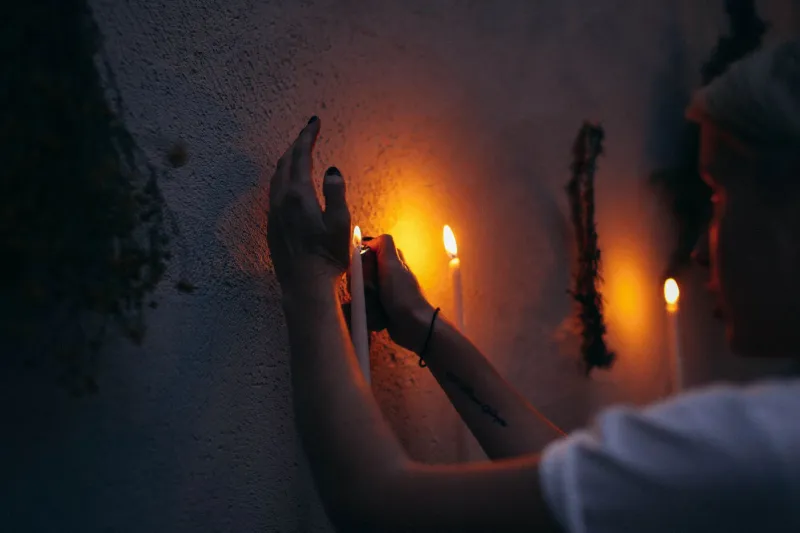
In apartments, especially oddly shaped or challenging ones, this negotiation becomes unusually visible. The awkward corner that you always light a candle in, not because candles go in corners but because that corner needs something warm. The path you take through a cramped living room that isn't the most direct route but feels right. The window you always crack before bed even in winter, because this particular apartment breathes better with it open.
These aren't superstitions, exactly. They're solutions that worked once and then calcified into ritual. And over time, the ritual becomes inseparable from the feeling of being home.
Mapping the Invisible Floor Plan
Derek Chung lives in a one-bedroom in Seattle with a layout that he describes as "a floor plan designed by someone who had only ever heard apartments described, never seen one." The bedroom door opens directly into the kitchen. The living room has two entry points but no natural focal point. The bathroom is, inexplicably, the largest room.
Over three years, Derek has developed an elaborate invisible map of the apartment — not the actual floor plan, but the emotional geography. Certain spots are for certain moods. The bathroom, with its absurd square footage, has become his thinking room. He does his best problem-solving in there, sitting on the edge of the tub with a cup of coffee.
"People think it's weird," he acknowledges. "But it's the quietest room. The light is different. I figured out a work problem in there that I'd been stuck on for weeks. Now I go in there when I need to think."
The kitchen doorway — the one that opens awkwardly into the bedroom — has become a threshold with specific meaning. Derek always pauses there before going to bed. A breath. A beat. "It's like a decompression chamber," he says. "I cross that doorway and I'm done for the day."
Small Lights, Big Meaning
Naomi Washington's studio apartment in Atlanta faces north, which means it gets almost no direct sunlight at any point during the day. For the first few months, this felt like a deprivation. Then she started buying candles.
Now the lighting ritual in Naomi's apartment is, by her own description, "genuinely religious." Different candles for different times of day. A specific unscented one for mornings, placed on the windowsill. A heavier, warmer-scented one for evenings on the coffee table. A third one — vanilla, always vanilla — that only comes out on Sundays.
"Sunday has a smell now," she says simply. "My apartment has a Sunday smell. That's not nothing."
What Naomi has created, without any particular intention, is a sensory calendar. A way of marking time and emotional register through the specific language of her specific space. The north-facing light problem didn't get solved — it got transformed into a system of meaning.
This is what odd apartments do to us when we let them. They don't just present problems. They hand us the raw material for something more personal than a design solution: a way of living that belongs entirely to us.
When Rituals Become Culture
What's striking, talking to people about their apartment rituals, is how quickly these private ceremonies develop their own gravity. Guests start to absorb them. Relationships form around them.
Sophia's kitchen-first ritual has become a kind of welcome protocol for visitors. She walks them through it — not as a tour, but because the kitchen is genuinely where she starts. Friends who've been to her apartment multiple times now do it automatically. The ritual has propagated.
Derek's bathroom thinking sessions have become a running joke and also a genuine resource among his friend group. When someone needs to work through something, they come over. They use the bathroom. It works.
Naomi's Sunday vanilla candle has become, for the people who know her well, a signal. If it's lit when they arrive, the day is slow and open. If it's not, she's probably working.
Without meaning to, these residents have created micro-cultures within their walls. Small systems of meaning that extend outward, that communicate, that invite others into the particular logic of a particular life in a particular space.
The Apartment as Teacher
There's a tendency to think of apartment rituals as adaptations — ways of coping with difficult or imperfect spaces. And they are that, partly. But they're also something more generative than coping.
The railroad layout taught Sophia something about her need for light that she wouldn't have learned in a more conventionally convenient apartment. The weird bathroom gave Derek a room for thinking that he didn't know he needed. The north-facing studio gave Naomi a relationship with candlelight that has made her apartment more alive, more textured, more hers than a sun-drenched space ever might have.
The odd apartment, in other words, isn't just a problem to be managed. It's a prompt. A question the space asks you about how you actually live, what you actually need, what actually matters when you're just trying to be home.
And the rituals you build in response — the small, repeated, sometimes inexplicable ceremonies — are your answer.
Every apartment has a liturgy. Most of us are already practicing it. We just haven't noticed yet that we invented a religion.