The Beautiful Disaster: Why Furniture That Refuses to Match Is the Most Honest Design Choice You Can Make
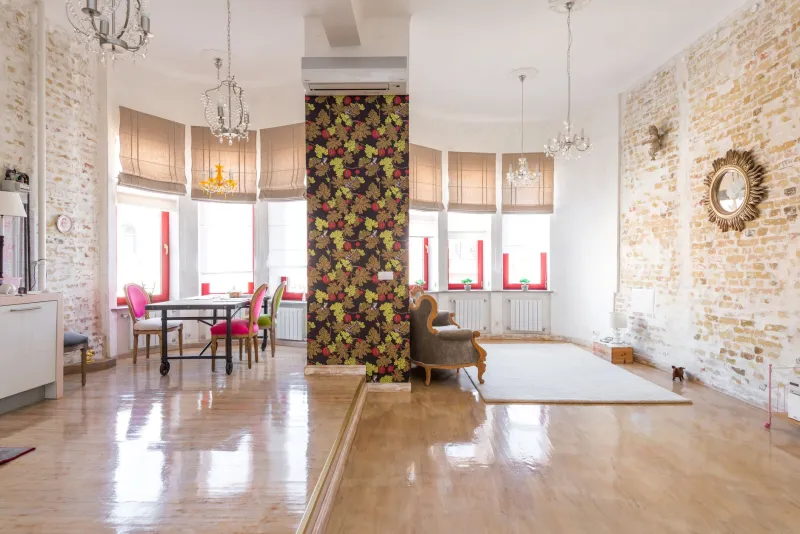
Somewhere along the way, the furniture industry convinced us that our living rooms should look like catalog spreads. Everything coordinated. Everything intentional. Everything available in three colorways that all somehow photograph the same.
And for a while, a lot of us tried. We really did.
Then we got the vintage side table at the estate sale and put it next to the IKEA sofa, and something clicked that all the coordinated sets never could.
The Tyranny of the Matching Set
Let's start with the obvious: matching furniture is, at its core, a retail invention. The idea that your coffee table, end tables, and entertainment console should share a bloodline was popularized by mid-century American department stores looking to upsell the full package. Before that — and in most of the world, for most of history — people just had stuff. Things accumulated. Things broke and got replaced with whatever was available. Things were inherited, traded, found, and occasionally dragged in off the street.
The result was homes that told stories. Complicated, layered, non-linear stories.
Somewhere between postwar prosperity and the rise of the big-box furniture store, we started to believe that a cohesive aesthetic was a moral virtue — that visual disorder signaled a kind of personal failure. That if your apartment didn't look like it had been professionally styled, you hadn't quite figured it out yet.
This is, respectfully, nonsense.
Discord as Design Language
Here's what actually happens when you mix a Bauhaus-inspired chair with a floral Victorian loveseat and a brutalist concrete lamp: the room gets interesting. Your eye moves. It finds relationships you didn't engineer. It creates meaning from contrast the way the brain always does — by searching for pattern inside apparent chaos.
Interior designers with more adventurous practices have been advocating for this approach for years. The concept of collected interiors — spaces that look like they've been assembled over time through genuine living rather than a single shopping trip — has gained serious traction in design circles, precisely because it produces rooms that feel inhabited rather than installed.
But you don't need design theory to justify it. You just need permission to trust what you've already accumulated.
Your Furniture Has a Timeline
Think about the pieces currently in your apartment. Chances are, they arrived at different points in your life and carry very different energies.
There's probably something from your first place — a lamp, a bookshelf, something that has absolutely no business being here but that you can't bring yourself to get rid of. There's the thing you bought during that period when you briefly believed you were going to be a minimalist. There's the piece a friend left behind. The thing you found on the curb on a Tuesday in September.
Each of these objects is a timestamp. Together, they're a biography.
The problem with chasing a cohesive aesthetic is that it requires you to edit that biography into something cleaner and more presentable than it actually is. You end up with a room that looks curated but doesn't feel lived in — a distinction that guests notice even when they can't articulate it.
The Specific Genius of Ugly Combinations
Let's talk about the pieces that are genuinely clashing. The orange velvet armchair next to the gray linen sofa. The ornate gilded mirror above the flat-pack dresser. The mid-century credenza crammed against the wall because the room is too small for it to have proper breathing room.
These combinations shouldn't work. And yet.
There's a concept in music called productive dissonance — the idea that tension between notes creates emotional resonance that pure harmony can't achieve alone. The same principle operates in visual spaces. A room with no contrast is a room with no tension, and a room with no tension is a room that doesn't demand anything from you emotionally.
The orange chair in the gray room demands something. It asks you to reckon with it, to decide how you feel about it, to notice it every time you walk in. That noticing is a form of aliveness that matching furniture sets systematically eliminate.
Practical Notes on Embracing the Chaos
None of this means you throw everything at the wall and call it intentional. There's a difference between a room that's interestingly mismatched and one that just feels unfinished or neglected. The distinction usually comes down to a few things:
Repetition of one element. You can clash everything else if you repeat one color, one material, or one scale across the room. A single consistent thread gives the eye somewhere to rest.
Commit to the pieces you have. The rooms that feel chaotic in a bad way are usually the ones where nothing seems chosen — where every piece looks like a placeholder for the thing you actually want. If you're keeping the mismatched chair, keep it with conviction.
Scale matters more than style. A Victorian loveseat and a mid-century armchair can coexist peacefully if they're roughly the same height and weight visually. Clashing styles are fine. Clashing scales create actual visual noise.
Let the room breathe. Mismatched furniture needs a little more negative space than coordinated sets because each piece is already generating its own visual energy.
The Most Honest Room in the House
At the end of the day, the case for mismatched furniture is really a case for authenticity. For letting your space reflect the actual arc of your life rather than the idealized version you'd post online.
The most interesting apartments — the ones that feel genuinely inhabited, the ones you remember long after you've left — are rarely the ones that look like a mood board. They're the ones that look like someone lives there. Someone with history. Someone who's been places and brought things back. Someone who once had a very specific vision for their living room and then abandoned it for something realer.
Your furniture doesn't have to agree with itself. It just has to agree with you.